USMLE Step 1 Roadmap
By Dr. Simran Narula MD, Clinical Fellow (Harvard Medical School)
Step 1 is the first of the three exams (USMLE 101 shows where it fits). This is the plan I used: two core resources, three phases, then assessments. When you pass, the Step 2 CK roadmap picks up from here.
01. Core Philosophy & Resources
This exam is Pass/Fail. It rewards pattern recognition and conceptual depth, not just volume. I intentionally kept my resources light to avoid burnout and confusion.
The ultimate tool kit:
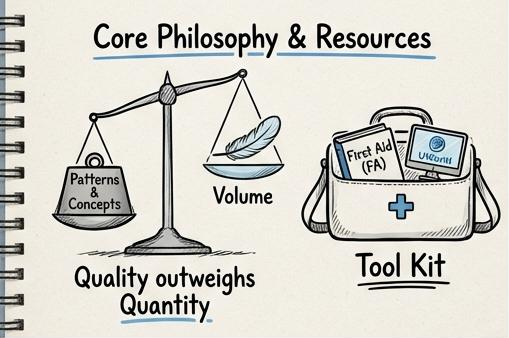
- First Aid (FA): My core reference and eventual "Master Book."
- UWorld (UW): My primary learning tool (not just for assessment).
Phase 1: The Foundation (Day 1 to 15)
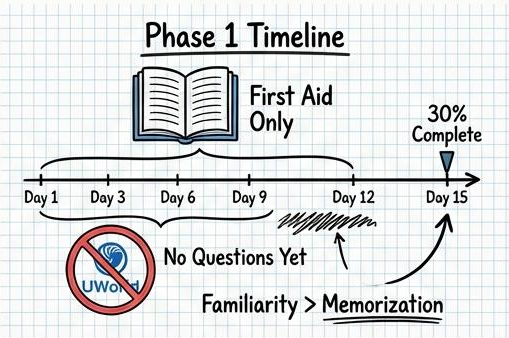
Focus: First Aid Only
For the first two weeks, I did not touch UWorld. My goal was familiarity rather than rote memorization. I needed to understand how the systems connected and how Step 1 concepts were framed before testing myself.
- Action Plan: Read through First Aid chapters.
- Target: Complete approximately 30% of First Aid.
- Why: This builds a sufficient knowledge base so that UWorld questions do not feel overwhelming when you eventually start them.
Phase 2: System-Wise Integration (Day 16 through Month 1)
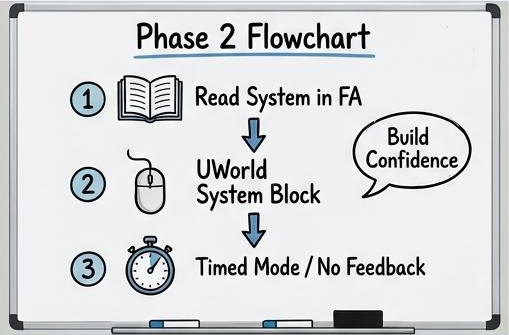
Focus: First Aid + UWorld (System-Wise)
Once I had that 15 day foundation, I introduced UWorld. However, I was very strategic about it. I only attempted UWorld blocks for systems I had already reviewed in First Aid.
The Workflow:
Read the System in FA: Ensure the content is fresh.
Do the Block: Select "System-wise" mode in UWorld.
Test Mode Settings: Always use Timed Mode with No Instant Feedback. This trained my decision making under pressure from day one.
The "Master Book" Review Method
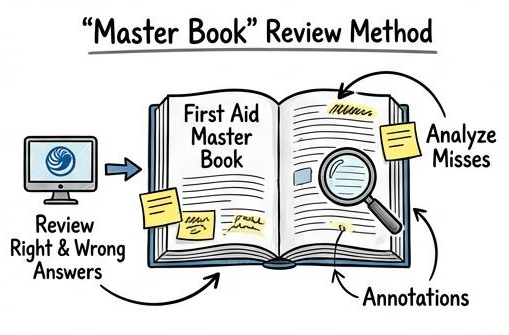
This is the most critical part of my strategy. This is how I ensured concepts actually stuck.
The Process:
- Setup: Keep First Aid open right next to you while reviewing a block.
- Read Everything: Read full explanations for the correct answer and the incorrect options.
- Annotate Missing Info: If UWorld had a concept not in FA, I added it via sticky notes or margin writing.
- Analyze Misses: If the answer was in FA but I missed it, I paused to ask myself why I failed to apply that line to the clinical vignette.
Result: My First Aid book evolved into a personalized resource containing every pattern I struggled with.
Phase 3: Random Mode & Targeted Review (Month 2 Onward)
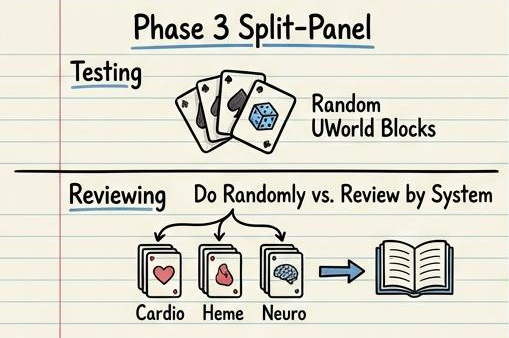
Focus: Random UWorld + System-Based Review
At this stage, I transitioned to doing UWorld blocks on Random. This simulates the real exam environment where topics jump from Cardiology to Neurology.
My Non-Random Review Hack:
Even though the block was random, I did not review it randomly.
Finish the random block.
Filter the completed questions by System.
Review all Cardiology questions together with the FA Cardio chapter open.
Move to the next system (e.g., Hematology).
This allowed me to fix weak systems as cohesive units rather than jumping around mentally during review.
Assessments: NBME & Free 120
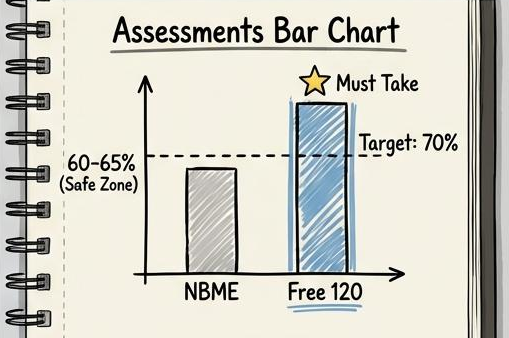
I did not take every NBME available due to time constraints. I prioritized quality over quantity.
NBME Self-Assessments:
- Frequency: 1 or 2 exams total.
- Purpose: To identify weak areas and ensure I was "safe."
- Safe Zone: A score of 60 to 65% generally indicates you are on track to pass.
The Free 120 (Non-Negotiable):
This is the closest representation of the real deal. You must take this.
- My Score: ~80%
- Target: Above 65 to 70% is reassuring.
Additional resources
A few optional add-ons if you want extra practice or targeted review.
- Pathoma (chapters 1-6)
- Board and beyond videos
- Dirty Medicine for Biochemistry (Youtube)
- Sketchy Pharma
- Sketchy Micro
Final Note
You do not need perfect scores. You need consistent UWorld review, deep integration with First Aid, and an honest assessment of your weak areas. Prioritize understanding over volume.
Good luck. You’ve got this.