My Road to Harvard
The fuller story behind the timeline, the delays, and the leap of faith
By Dr. Simran Narula MD, Clinical Fellow (Harvard Medical School)
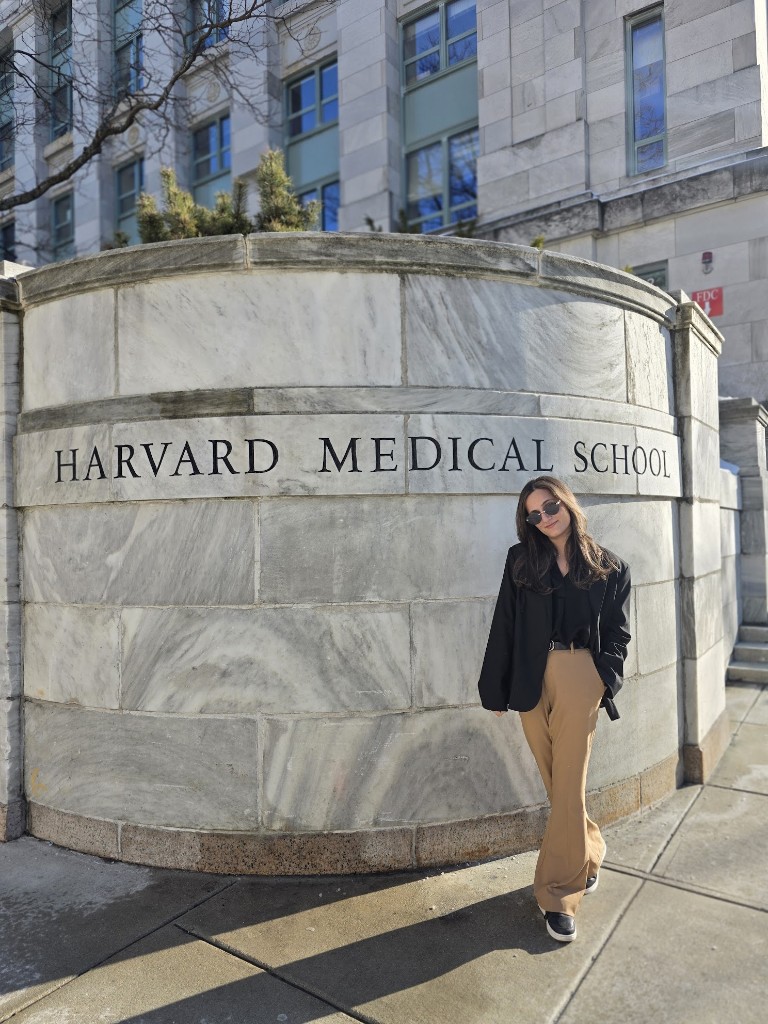
When I posted my timeline, my DMs flooded with the same question: "But how did you actually survive it?"
On paper, a timeline looks like a neat staircase. Residency. Step 1. Step 2. ECFMG. Harvard. But real life doesn't happen on paper.
This page is the invisible part of the timeline. The delays, the quiet panic of paperwork, the studying between night shifts, and the one terrifying decision that changed the course of everything.
The Timeline Everyone Saw
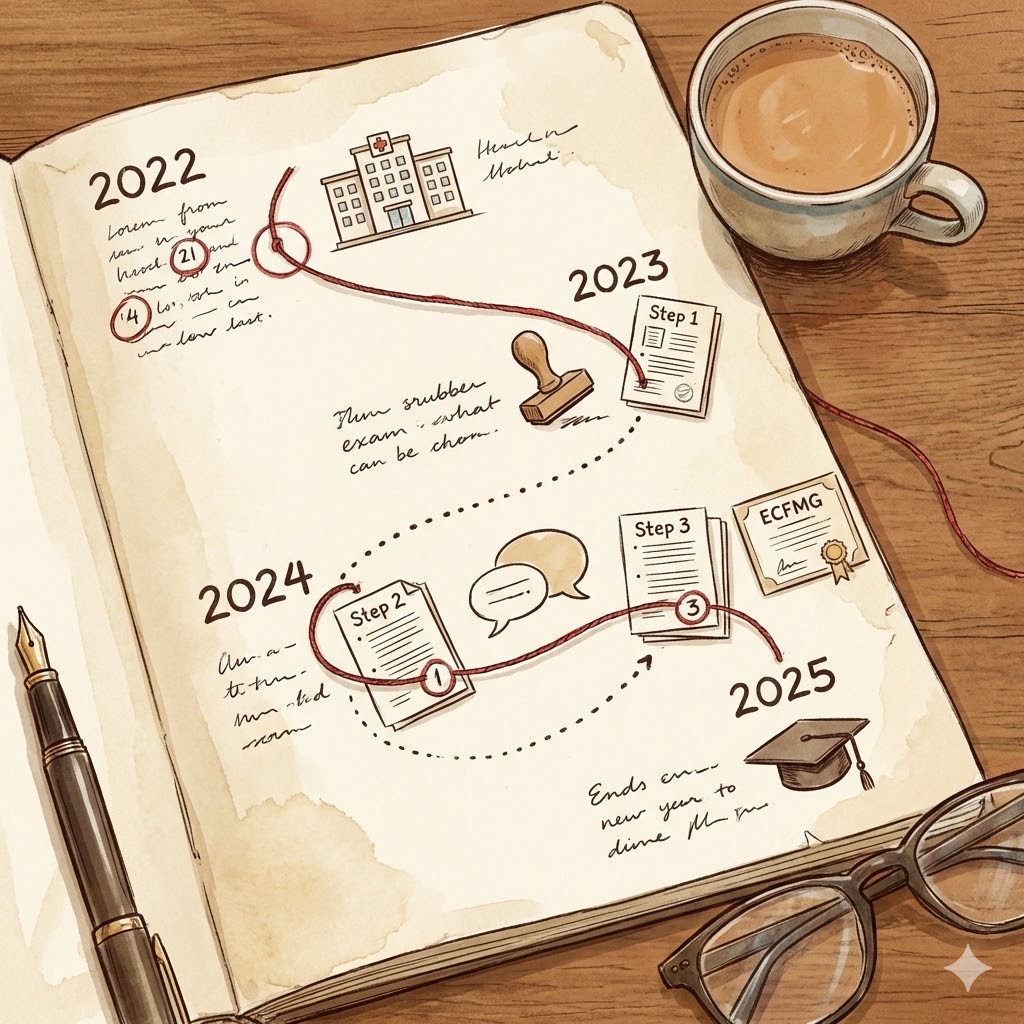
People keep asking me, "What did your timeline actually look like?" Here it is.
- 22'
February 2022
Joined my Radiology residency at MAMC, Delhi. At this point, Harvard was not even on my radar.
- 23'
January 2023
Started the paperwork nightmare. Document verification. If I had known this would take almost a year, I would have started the day I joined residency.
- 23'
July 2023
Took USMLE Step 1. Studied entirely between shifts and on weekends. There was never a "dedicated study period." I just did not let that stop me.
- 24'
June 2024
Took USMLE Step 2. Almost a full year between steps, and that is okay. Life does not pause for exams.
- 24'
August 2024
Took the OET (Occupational English Test).
- 24'
September 2024
Became ECFMG Certified. This was the moment everything felt real. The door was officially open.
- 24'
November 2024
Took USMLE Step 3.
- 25'
January 2025
Appeared for MD Radiology exams.
- 25'
March 2025
Received an offer letter from Harvard. I read it three times. An IMG who studied between night shifts, with no connections in the US, was going to Harvard. If I can do it, I genuinely believe you can too.
What Happened Between The Dates
The Reality of Residency
When I joined my Radiology residency at MAMC, Delhi in 2022, Harvard wasn't the master plan. I was just trying to survive the workload and learn how to carry the immense responsibility of being a doctor. The idea of building a route to the US was a distant thought, a question sitting quietly in the background, waiting for me to have the energy to answer it.
The Quiet Panic of Paperwork
What really slowed everything down wasn't the studying. It was the administration. "Verification" sounds simple until it becomes your daily headache. Chasing medical school documents, signatures, approvals, follow-ups, and dealing with endless delays. It took far longer than I ever expected, and that delay shaped my entire timeline. If I could go back, I would tell myself to start the paperwork the day I joined residency.
Studying in the Margins
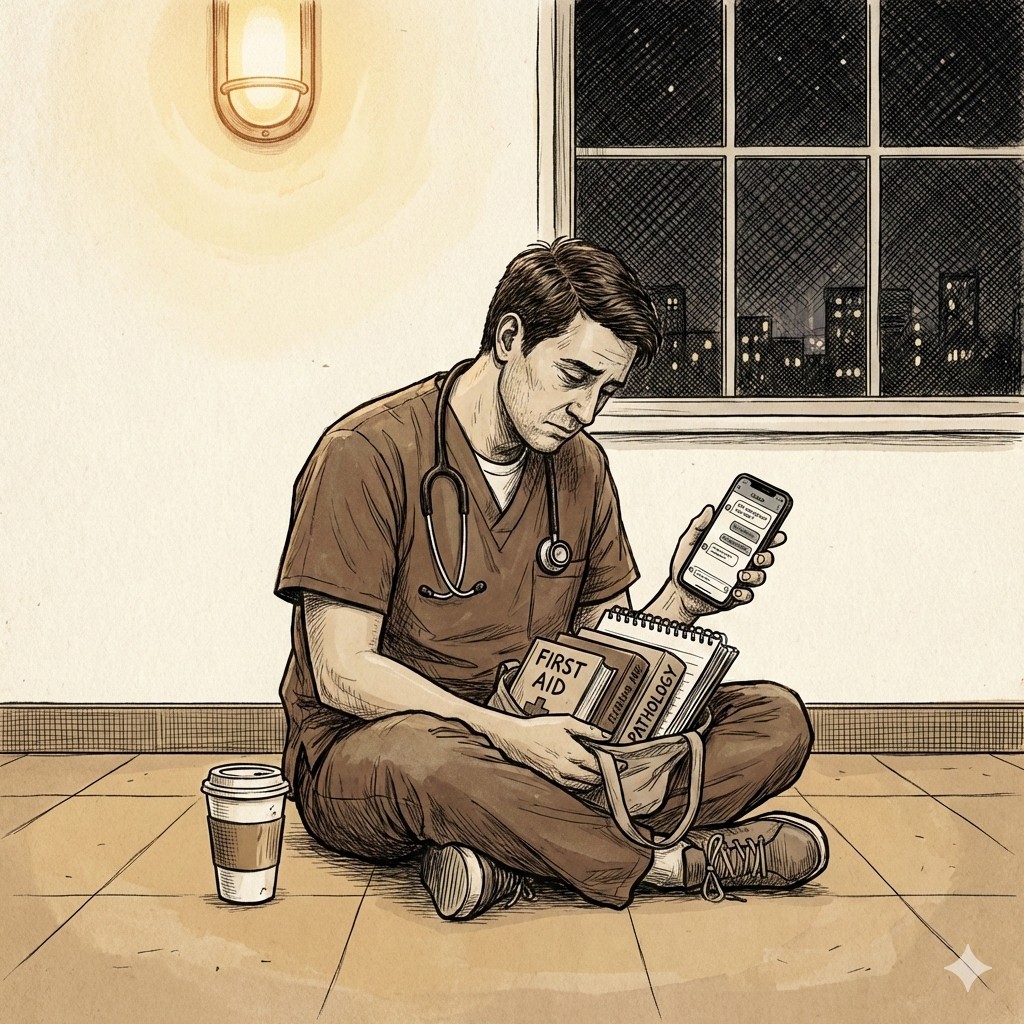
There was no perfect study setup. No six-month break. No blank calendar. Step 1 happened during residency, not outside of it. That meant preparation happened in fragments: after exhausting duties, between calls, on weekends, and in tired pockets of time that never felt like enough. Progress only came when I accepted that consistency had to replace ideal conditions.
Momentum Over Speed
There was almost a year between Step 1 and Step 2. Then came OET, ECFMG certification, and Step 3. To someone outside the process, that sequence can look agonizingly slow. But inside the process, it was momentum. I was moving forward, even if it wasn't the dramatic sprint social media likes to show. Some seasons are about rapid progress. Some are just about endurance.
Living Two Lives at Once
One part that often gets left out is that I wasn't just preparing for US exams. I was still responsible for the path I was already on. I appeared for my MD Radiology exams in January 2025. This was never a story of pressing pause on one life to start another. It was about carrying the weight of both, even when it felt impossible.
What Saved Me Academically
When you don't have time, you can't afford bad study strategies. A big part of this journey was building a system that actually worked for Step 1 and Step 2.
Step 1: Building the Base
For Step 1, my approach was simple: keep resources light, avoid burnout, and build pattern recognition slowly. I started with First Aid only, then added UWorld system-wise, and later moved into random mode. My goal wasn't to collect every resource out there, but to deeply integrate the right ones.
- First Aid as the base, then UWorld once the foundation felt solid.
- A "Master Book" style review so First Aid became highly personalized and high-yield.
- Fewer assessments, but a strong emphasis on NBME logic and Free 120.
Step 2 CK: The Sprint
For Step 2, I had much less time, so the strategy had to be ruthless. The preparation lasted about three months while working full-time. I focused entirely on UWorld, structured note review, selected NBMEs, and high-yield revision instead of trying to do everything.
- Month 1 for foundation, Month 2 for intensity, Month 3 for NBMEs and refinement.
- The DNF notebook system for concepts I had to repeatedly revisit.
- Minimal resource overload, maximum review depth.
If You're Starting Now
If you are reading this early in your own journey, this is the basic structure I wish someone had handed me on day one.
Jun 2026
Keep a buffer month for paperwork and processing.
Jul 2026
Step 1 and Step 2 should ideally be completed.
Nov 2026
Applications start opening. Be ready to submit early.
Pathway 1: Fellowship
For IMGs who have completed residency outside the U.S. and are targeting fellowship via the Alternative Pathway option.
- Early-Mid 2026: Complete Step 1 and Step 2 CK, start or finish ECFMG certification, decide your subspecialty.
- Mid-Late 2026: Draft your personal statement, confirm LOR writers, submit early.
- 2027: Attend interviews, finalize offers, process visa.
- 2028: Start fellowship.
Pathway 2: Residency
For current MBBS students or recent interns aiming for the Match.
- Early 2026: Begin Step 1 prep and build consistency.
- Mid 2026: Take Step 1, move into Step 2 prep, start building your CV.
- Early 2027: Finish Step 2 CK, take OET, secure ECFMG certification, pursue research or observerships.
- Mid 2027 onward: Personal statement, LORs, ERAS, and Match preparation.
The Leap Of Faith
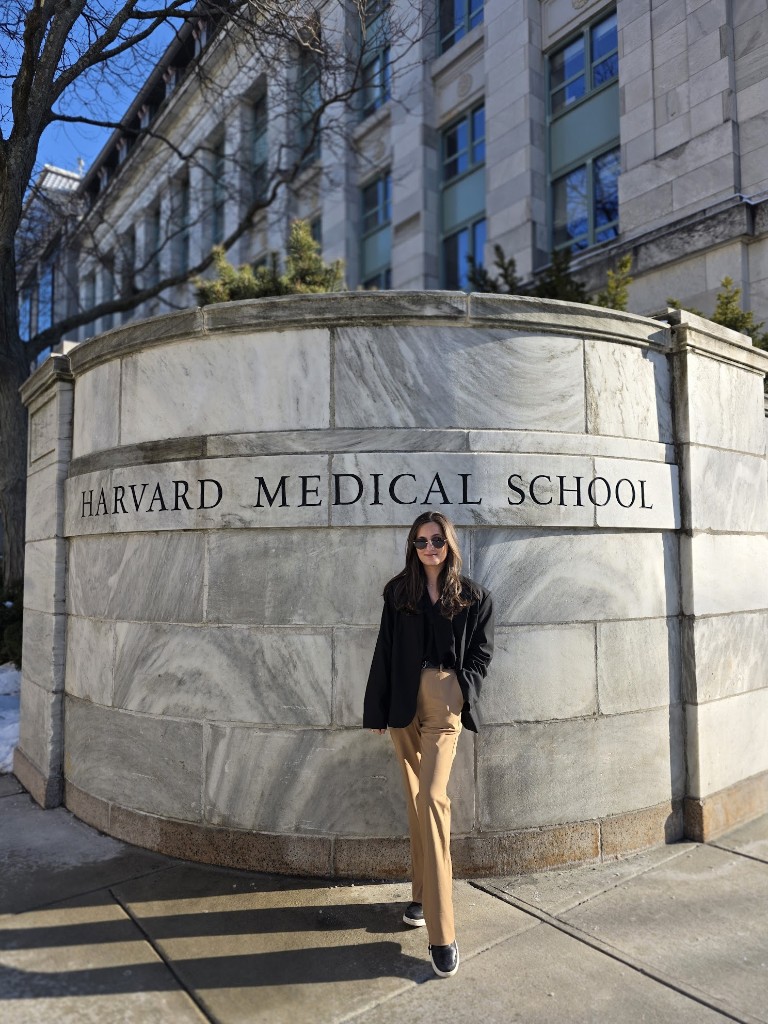
This is the part the timeline never captures. The quiet, terrifying moment of having to choose.
Many of you asked me how I ended up with a 2025 Harvard start when I keep repeating that fellowship programs often fill up almost two years in advance. That question is exactly why I keep emphasizing the timeline, because it shaped my own journey in a very real, very stressful way.
By the time I was applying at the end of 2024 for a 2025 start, I was already too late for many of the most competitive programs. That is exactly what happened with Harvard. When I finally interviewed there, I was effectively interviewing for the 2026 session, not the 2025 one.
At the same time, a few other universities (mostly less competitive and lesser-known programs) still had some 2025 spots available. I interviewed at those places too, and I got those offers.
So the real decision sitting in front of me wasn't simply "Harvard versus nothing." It was Harvard for 2026, or a guaranteed 2025 start at a program I didn't feel equally aligned with.
Deep down, I believed I was meant for something better. Something like Harvard. So I made a decision that looked entirely irrational to a lot of people around me. I rejected the safe 2025 offers and chose the 2026 Harvard seat, even though it meant I would have to sit idle for more than a year while watching others move forward.
That was the leap of faith. Not just saying yes to a dream program, but having the courage to refuse to compromise on the program I truly wanted, even when it cost me time.
Then something unexpected happened
Because of circumstances entirely outside my control, one spot suddenly opened up in the 2025 batch. Since I was already the first admit for 2026, I was given the chance to move forward and start in 2025 instead.
Because the offer itself came very late, and there were still multiple administrative formalities to complete before I could move, I joined around two months late. But I was still incredibly happy, because I got the 2025 start year I wanted without compromising on the program I truly wanted.
I think about this season of my life not just as a timeline, but as a lesson in conviction. Sometimes, when you take the leap of faith, God shows you kindness in ways you could never have planned for yourself.
What I Took From It, And Why I Share It Now
- 1.
A timeline is useful, but it never tells the whole story. The hardest parts are always invisible.
- 2.
Preparation is rarely glamorous. Most of it is just repetition, patience, and showing up when you are exhausted.
- 3.
Paperwork can quietly shape your outcomes just as much as your board scores do.
- 4.
Fellowship applications often open almost two years in advance, and I had absolutely no idea. That lack of information is exactly why I was too late for the 2025 batch initially.
- 5.
Choosing the right program over the fastest option can feel terrifying, but sometimes that is exactly what forces the right door open.
- 6.
You don't need a perfect, uninterrupted study story to get somewhere extraordinary. You just need honesty, persistence, and the courage to keep going.
At the time, getting the 2026 admit felt devastating. I remember sitting there feeling incredibly low, not because Harvard wasn't an unbelievable opportunity, but because I realized how brutally a simple lack of information can derail this journey. If I had known earlier that fellowship applications open so far in advance, my entire timeline might have looked different.
I got lucky. A spot opened up. I was moved forward. But I know very well that "luck" cannot be a system, and it will not work out that way for everyone.
That realization is exactly why I feel so connected to this new motivation: to share what I know, build platforms, and create spaces for like-minded people. I don't want anyone else to lose out on an opportunity purely because nobody told them what they needed to know early enough.
If you are in the middle of your own uncertain season right now, I hope this reminds you that a delayed chapter is not a failed one.
Sometimes the leap of faith is simply refusing to settle, and sometimes that changes everything.